In 2024 Donald Trump proved that his outlandish narrative resonated among the American public despite being full of lies and bigotry. The clear electoral victory displayed that the public was prepared to forgive his personal misgivings, trusting that he could deliver growth and limit migration as “the dealmaker”. The result caught even many analysts, once again, by surprise.
In contrast to Trump’s first term in the White House, the second term has already proven to be transformational for the US. The strong support in the Congress and in the Supreme Court has allowed Trump to push policies in an unusual scale and pace. Radical ideas of the fringe think-thanks, like the Heritage Foundation, have suddenly found their way into the mainstream policymaking.
The shameless strategy has created a dangerous precedent for the US. Americans should be particularly worried about Trump’s clear disregard for the Constitution whenever the document is misaligned with his objectives. A nation, whose basis is heavily founded on the legislation, should always keep its leaders to account for their crimes. In the long-term, the greatest transformation caused by Trump might end up being the undermining of the institutional integrity.
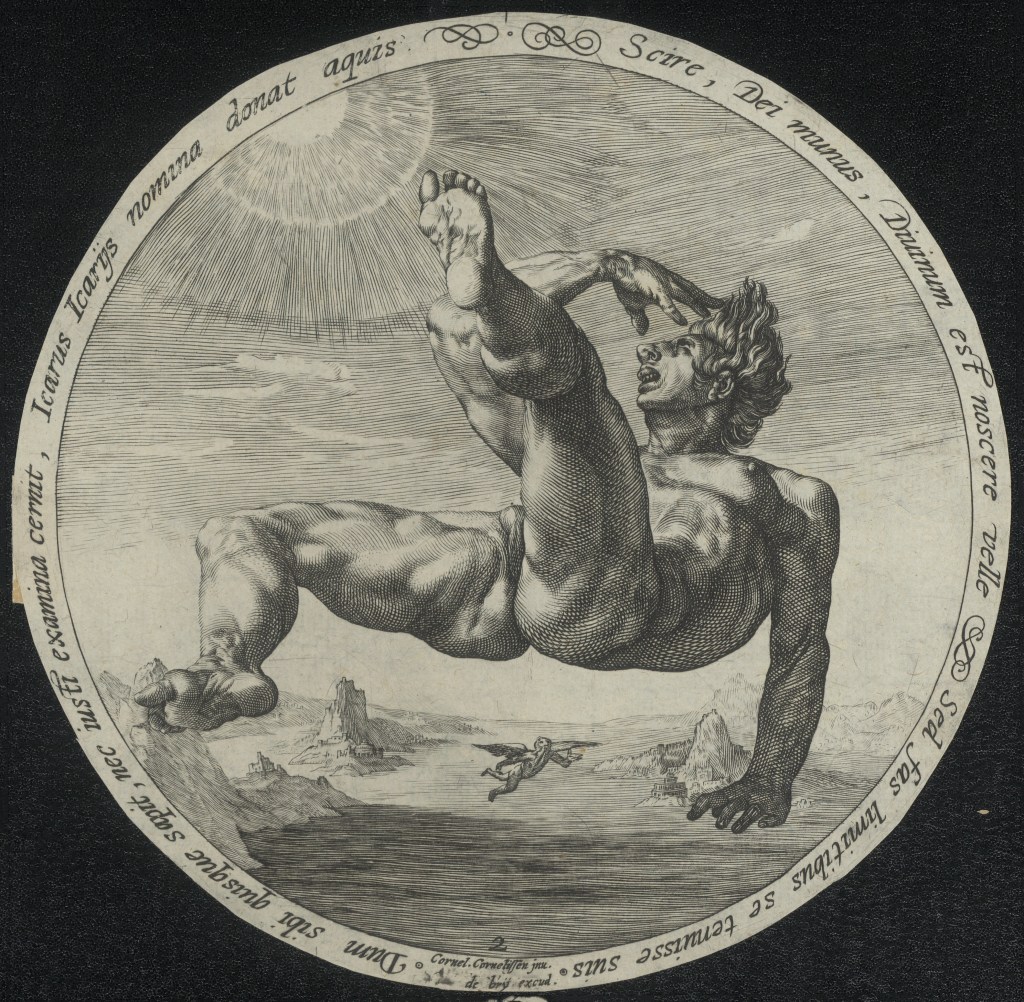
Flying
During the past year, Trump has sometimes pushed decisions without any constraints whatsoever. These include orders to deport undocumented migrants, to threaten misbehaving nations with tariffs, and to intervene militarily on foreign affairs. Validity of such decisions is often questionable, at the very least, from the perspective of courts and lawmakers alike. However, since courts evaluate decisions relatively slowly, the White House can push far before any kind of judgment can be issued. For example, the Supreme Court’s recent ruling on tariffs came so late that the president was already able to plunge the global economy into uncertainty.
Moreover, when judges have opposed the policies, the White House has questioned the legibility of the verdicts. In such cases, Trump and his team have called the judges as “ideological” and “disloyal”. The message of the president is clear: the only correct ruling is one which supports the White House. Although the administration’s reactions are immature, even the Democrats have plenty to criticize in the justice system of the US. The decades-long combat to appoint judges has created a general sense of suspicion for all the rulings. If such a view is allowed to persist, the courts can lose their legibility and give ways for alternative channels of justice. Thus, Trump’s aggressive rhetoric towards the courts is threatening to fuel the pre-existing hostilities even further and derail the institutional integrity.
Another strong line of offensive has gone against the press which attempts to record the wrongdoings of the administration. Trump seems to believe that he gains popularity by waging information wars during regular press briefings both inside and outside the White House. For him, the press briefings are a tool to display whose story is right and whose is wrong: a way to show that every hostile news story is a fake one. Critical journalists can be insulted to signal how weak they and their media outlets are.
During the second Trump administration, the information wars have gone beyond the press briefings and Truth Social updates. They now involve even modification of media narratives with assistance of the generative AI. While these alternatives messages seem silly for an outsider, they can have a powerful impact on a right-wing audience who holds strong suspicion towards the traditional press outlets. In a polarized world, Trump benefits from the decay of traditional media outlets which combine stories from different political spectrums.
Falling
The radical beginning of Trump’s second term has left commentators asking how far the president is ready to go on with his project. Would he be ready to alter the mid-term elections in the favour of Republicans? It is a valid question, since he is the same person who attempted to turn the 2020 presidential election results. Yet he is running out of the needed political capital. The core policies around immigration and the economy have dramatically declined the support from the public and the financial sector. The public cannot accept the morally questionable decisions of the president, and the finance cannot accept the global uncertainty. Hardly anyone supports the vast efforts to renovate the White House.
Previously compromising forces have noticed the cracks that are appearing all over the administration. Republicans, who once feared Trump, have publicly challenged his calculus and demand a change of priorities. European allies, who once knelt in front of Trump, have generated anti-American strategies to limit the president’s powers over them. Even the Supreme Court has rebuked Trump’s key policies on tariffs, despite holding a comfortable conservative majority. The quickly diminished support does not mean, however, that Trump is necessarily becoming a mere lame duck. He holds no reservations to test the limits of presidential powers and should be expected to delve into grey areas of policymaking.
An obvious grey avenue forward is to push further military interventions. Even while the Congress holds powers to declare warfare, the president has a possibility to use military in the name of national security. The capture of Venezuela’s president Nicolás Maduro already displayed that the current administration is not afraid to manoeuvre a change of regime with use of force. Although the mission openly betrayed the key principles of international law, most Americans hardly saw the move as a shocking use of power. For years Maduro has been caricatured as a gangster whose main business is in trafficking illegal drugs to America. When the operation is looked through such black-and-white lenses, removing Maduro can be seen almost as America’s duty for all the people who have suffered from his reign. After all, Americans still have not lost the pride of their military capability and enjoy flexing their muscle, if it can be done without great casualties.
Drowning
Then again, Trump’s war against Iran is proving to be exceptionally unpopular among the American public. In contrast to the previous American wars at the Persian Gulf, the current strikes came at a time when the living costs have troubled Americans for several years. Moreover, the decision to attack runs against the key pledge to stop foreign wars and to concentrate on the domestic issues. As costs accumulate on the gas pumps and along the main street, even the core MAGA-base begin to feel frustrated by the war.
Getting away with the conflict will be tricky. Iran’s theocratic regime is going through an existential fight for its survival and is surely prepared to use all tools at hand to bring suffering for Americans and Israelis. By pulling away from the region, the US would essentially leave its own mess for others to clean. And those others are not only Europeans, but Russians and Chinese who hold military capabilities to fill the power vacuum. Therefore, it is very likely that the US is forced to keep large presence in the Middle East, despite Trump continuously stating otherwise.
Trump can still gain modest victories from the war. One way forward is to disarm the regime from its enriched uranium by completing a special operation of an unprecedented scale. Another possibility is to arm Iraq’s Kurdistan fighters and other militant groups to fight against Iranian regime. However, both approaches are unlikely to deliver any sustained peace which is needed for the energy transfers and the travel industry. At some point, Trump is forced to form a truce with the regime, if he wants the market to return in some form of normality. Many who believed him to overthrow the cruel regime will be disappointed by the outcome.
From an American perspective, there is no immediate treat when the soldiers return from the battlefield. Most companies are already struggling to pay their bills which were lifted significantly by the global tariffs and now get additional weight from the high costs of oil and gas. Although the fossil energy sector is profiting in windfalls from the war, the rest of the economy is on a shaky foot as a mere handful of technology giants are accruing the benefits of growth. It has certainly not been an ideal time to take risks in the foreign soil – if there has ever been such a time.
When Iranian war will be looked back upon in the future, the war can look like a symbol of hubris, where Trump lost track on his voters. Across the media, this seems to be the prevailing view of the matter. A lot depends on Trump’s ability to package the war as a success story and to return on domestic issues. A voter’s timeframe is short, and many Americans are prepared to forgive costs of few months’ war. However, they are less prepared to accept ever-rising prices to which Trump has very little leverage. He can distract by shifting Cuban regime or by taking over the FED, but it hardly makes much difference if the basic needs cannot be met. It has just become far too easy to argue that Trump has only himself to blame for all the misery.
 saukotuksia
What’s your view?